Therapists Supporting Clients Through High-Conflict Divorce

Therapists Supporting Clients Through High-Conflict Divorce — featured image
Certified Divorce Specialist

Therapists Supporting Clients Through High-Conflict Divorce

A practical guide for therapists working with clients navigating high-conflict divorce.

Short answer: Therapists supporting high-conflict divorce clients need three things — clear scope-of-practice boundaries, a referral network of legal and financial professionals, and personal-sustainability protocols to prevent burnout. Divorce work is emotionally intense, ethically complex, and often long-running. CDS training gives therapists a framework for holding all three effectively while supporting clients through what may be the most difficult chapter of their lives.
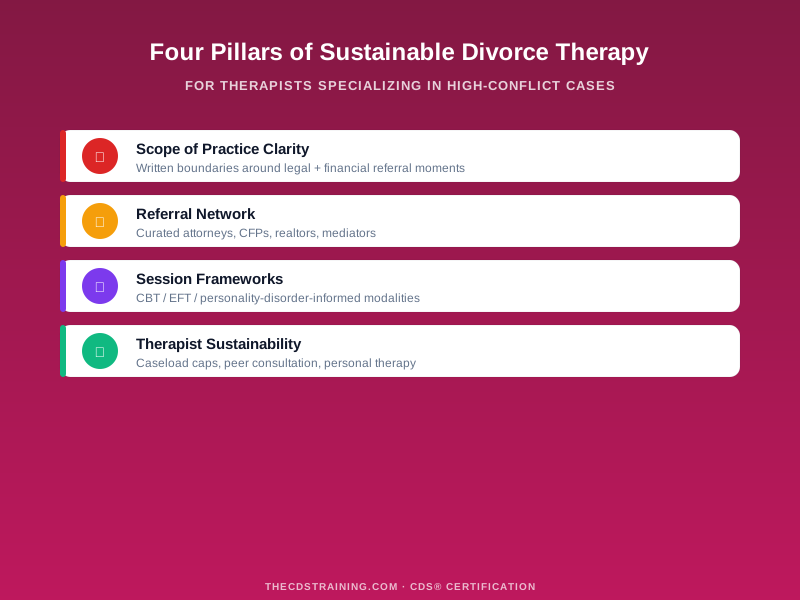
Therapists Supporting Clients Through High-Conflict Divorce — infographic

The four pillars of sustainable therapy practice in high-conflict divorce work.

What Changes in High-Conflict Divorce Work

Standard therapy training equips therapists to work with individuals processing difficult life transitions. High-conflict divorce adds specific dynamics — legal timelines that shape sessions, custody disputes that create urgency, and often narcissistic or borderline personality dynamics that require adjusted therapeutic frameworks.

💚 Why divorce-specific training matters
General therapy training covers many life transitions. High-conflict divorce combines legal pressure, financial anxiety, and family disruption in ways few other transitions do. Specialized training gives you frameworks tuned for exactly this combination.

The Four Pillars

Pillar 1 — Scope of Practice Clarity

Divorce clients often want their therapist to become an all-purpose adviser. This is where most therapists get into trouble. Clear scope means: you provide therapeutic support for emotional processing, coping skills, and mental-health treatment. You do NOT give legal advice, financial recommendations, or opinions on custody arrangements outside of court-ordered evaluator roles.

Pillar 2 — Referral Network

Every therapist working divorce clients needs a curated list of referrable professionals:

⚖️

Family Law Attorneys

Ideally CDS-certified. Refer for legal representation, questions about court process, and settlement negotiation.

💰

Financial Planners

For settlement analysis, budgeting during separation, and post-divorce financial rebuilding.

🏠

Real Estate Specialists

When the marital home is part of the discussion or clients need help transitioning to a new home.

🤝

Mediators & Coaches

For lower-conflict cases where mediation is an option, or for divorce coaching support between therapy sessions.

Pillar 3 — Session Frameworks

High-conflict divorce work benefits from structured frameworks. Cognitive Behavioral Therapy (CBT), Emotionally Focused Therapy (EFT), and modalities designed for personality-disordered dynamics all have specific application in divorce contexts. CDS training doesn’t replace clinical training — it provides the divorce-specific context to apply your existing modality well.

Pillar 4 — Therapist Sustainability

Divorce work is emotionally taxing at scale. Therapists specializing in this segment need explicit protocols — session load limits, peer consultation, personal therapy, and clear scheduling boundaries — to sustain the work over years.
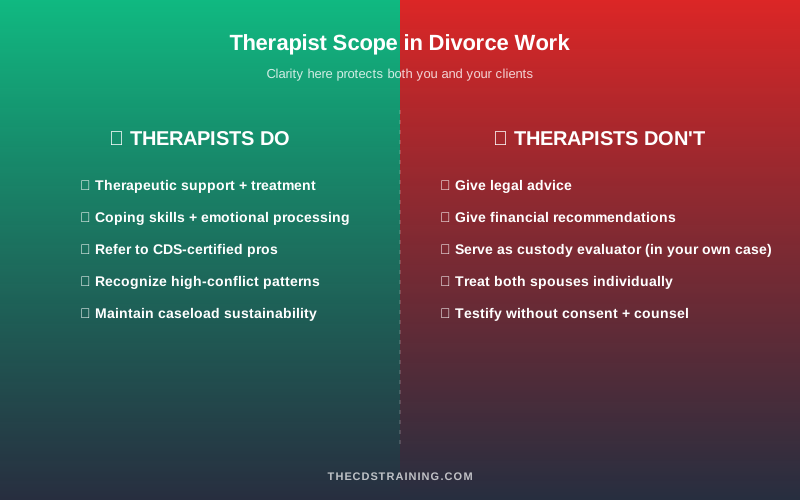
Therapists Supporting Clients Through High-Conflict Divorce — illustration

Where therapy fits in the client’s broader divorce professional team — and where other pros take over.

Recognizing High-Conflict Dynamics

Not every difficult divorce is “high conflict” in the clinical sense. High-conflict divorces typically involve:

  • Repeated litigation even after settlement
  • Chronic non-compliance with court orders
  • Alienating behaviors around custody
  • False allegations that shift over time
  • Inability to reach agreement even on minor logistics

Recognizing these patterns early helps you calibrate your therapeutic approach and set appropriate expectations with clients.

Working with Attorneys

⚖️ The confidentiality boundary
When your client’s attorney reaches out, you cannot share therapy content without your client’s explicit written consent. And even with consent, be careful: what you say may end up in a court proceeding. Consult with clinical peers or an ethics consultant before releasing any information.

Building Your Referral Network

Referral-network builder for therapists
1
Get CDS training for shared vocabulary
2
Meet local family-law attorneys and CFPs
3
Attend mediator + Bar section meetings
4
Refer + get referred, track outcomes

Related reading: divorce cases attorneys handle and how mediators build referral relationships.

Serve Divorce Clients Sustainably

See how the CDS curriculum helps therapists work within scope and refer appropriately.
CDS for Mental Health Pros →

Frequently Asked Questions

Do I need special licensing to work with divorce clients?+
No — your existing mental-health license covers therapy work with divorce clients. Specialized certifications like CDS add context and referral network, not licensing authority.
What’s the difference between therapy and divorce coaching?+
Therapy treats mental-health conditions and processes emotional content clinically. Divorce coaching is action-focused, non-clinical support around decisions and process. Coaches are not therapists. See our CDS vs Certified Divorce Coach comparison for more.
How do I handle clients whose ex is also asking me for therapy?+
You cannot ethically treat both spouses individually. Refer the second person to a colleague and be explicit about why.
How do I prevent burnout when many of my clients are in high conflict?+
Cap the percentage of your caseload that’s high-conflict divorce (many specialists cap at 30–40%). Maintain peer consultation, your own therapy, and hard scheduling boundaries.
Can I be an expert witness in my client’s divorce?+
Sometimes, but it dramatically changes the therapeutic relationship. Most clinicians decline expert-witness roles in their own client’s cases and refer to a separate evaluator.
How does CDS training help me specifically as a therapist?+
It gives you working fluency in the legal, financial, and real-estate context your clients are navigating — so you can support them better and refer them well. See CDS for mental health professionals.
CPAs and Divorce: Tax Considerations Every Practice Should Know

CPAs and Divorce: Tax Considerations Every Practice Should Know

The tax landscape of divorce for CPAs — asset division, filing-status transitions, dependents, cash-flow modeling, and where clients need cross-disciplinary…
How Mediators Build Referral Relationships with CDS Professionals

How Mediators Build Referral Relationships with CDS Professionals

How divorce mediators use CDS-certified referral networks to serve clients better across financial, legal, and real-estate dimensions of a divorce.
Financial Planners: Building a Divorce Practice Vertical

Financial Planners: Building a Divorce Practice Vertical

How CFPs and wealth managers add divorce as a practice vertical — client acquisition, credentials to hold, service design, and…