How Mediators Build Referral Relationships with CDS Professionals

How Mediators Build Referral Relationships with CDS Professionals — featured image
Certified Divorce Specialist

How Mediators Build Referral Relationships with CDS Professionals

How divorce mediators use CDS-certified referral networks to serve clients across all four core divorce disciplines.

Short answer: Mediators serve clients best when they can seamlessly refer to attorneys for legal review, financial planners for cash-flow modeling, therapists for emotional support, and realtors for the marital home. CDS-certified referral networks give mediators pre-vetted specialists who share the same vocabulary and process. Below is the practical guide to building that network — and how CDS training itself helps mediators do the work better.
How Mediators Build Referral Relationships with CDS Professionals — infographic

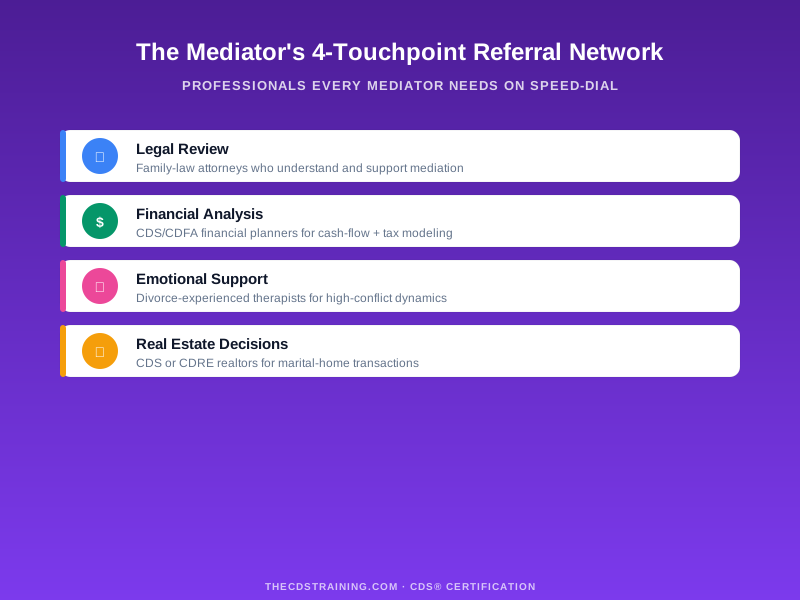
The four professional touchpoints most mediators end up needing during a case.

Why Referral Networks Matter for Mediators

Mediators are neutral by definition — they don’t represent either spouse, don’t give legal advice, and don’t recommend specific financial outcomes. That neutrality is what makes mediation work. But it also means clients often need professionals outside the mediation room for questions the mediator can’t answer directly.

🤝 The neutrality-referral bridge
A mediator with a strong referral network provides clients with vetted specialists without breaking the mediator’s neutral stance. That combination — neutrality inside the room, expertise outside — is what makes mediation successful.

The Four Professional Touchpoints

1. Legal Review

Every mediated agreement should be reviewed by each party’s independent legal counsel before signing. Mediators build relationships with family-law attorneys who understand mediation, don’t undermine the process, and can flag substantive legal issues without derailing the settlement.

2. Financial Analysis

When cash-flow projections, tax analysis, or asset-division modeling exceeds the mediator’s scope, referring to a CDS-certified financial planner or CDFA is standard practice. See our related post: how CFPs build a divorce practice.

3. Emotional Support

High-conflict dynamics, grief, and mental-health issues that surface during mediation often require referral to a divorce-experienced therapist. See our post on therapists supporting clients through high-conflict divorce.

4. Real Estate Decisions

When the marital home is part of the settlement, both spouses may need a divorce-experienced realtor to handle listing, buyouts, or new-purchase financing. See how realtors specialize in divorce real estate for the specialist path.
How Mediators Build Referral Relationships with CDS Professionals — illustration

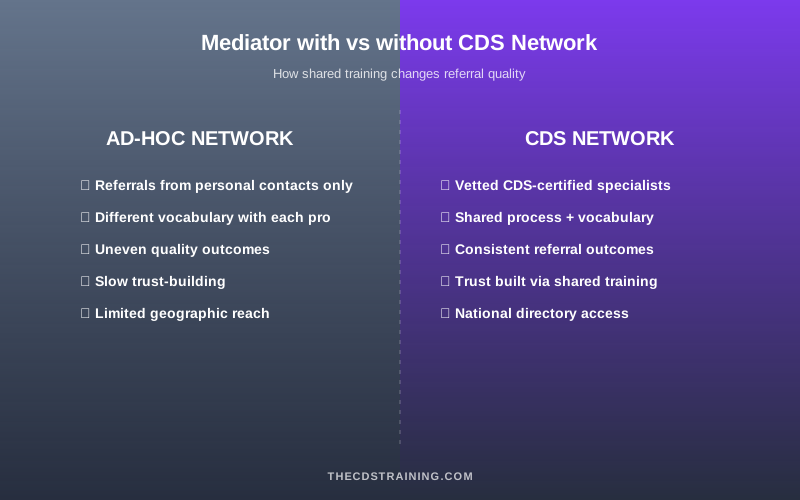
How the CDS network functions as a shared reference frame across the mediator’s professional team.

Why CDS Matters for Mediators Specifically

Mediators come from many backgrounds — law, mental health, finance, or independent training programs. CDS gives mediators from all backgrounds a shared vocabulary with the specialists they refer to. When you refer a client to a CDS-certified CFP, you know that CFP has been trained in the same process framework you use. That shared foundation makes referrals cleaner and outcomes better.

📚

Shared Curriculum

You and your referral partners studied the same process, terminology, and cross-disciplinary framework.

🌐

National Directory

The CDS graduate directory gives you names to refer to when clients ask for professionals in specific cities.

📅

Ongoing Community

CDS graduate events (including monthly Canada Connect meetings) build the trust that makes referrals reliable.

Building Your Mediator Referral Network

Mediator network-building sequence
1
Complete CDS for shared framework
2
Meet local CDS-certified attorneys + CFPs
3
Attend NADP + local mediator networking events
4
Refer + reciprocate; track quality of outcomes

Working Within Your Scope

⚖️ The mediator’s scope boundary
Even the most experienced mediator cannot give legal advice or represent either spouse. Referring appropriately protects both your practice and your clients. When in doubt, refer.

Canadian Mediators and CDS

The Canadian CDS track is particularly valuable for mediators in provinces with distinct family-property regimes (Ontario, Alberta, BC, Quebec Civil Code). The monthly Canada Connect meetings give Canadian graduates ongoing exposure to provincial developments.

Deepen Your Mediation Practice

See how the CDS curriculum equips mediators to serve clients across all four core divorce disciplines.

CDS for Mediators & Peacemakers →

Frequently Asked Questions

Can I refer clients from mediation to my own separate practice?+
Yes, but disclose the relationship in writing before the referral. Transparency around any secondary business relationship preserves your neutral role.
Do mediators need CDS if they already have specific mediation training?+
CDS complements rather than replaces mediation-specific training. It adds the cross-disciplinary context (legal, financial, real-estate) that mediators reference when working with divorcing clients but often don’t formally study.
How do I find divorce-experienced attorneys who don’t undermine mediation?+
Look for attorneys who are themselves trained mediators or hold CDS credentials. Family-law Collaborative Practice groups are another strong source of mediation-friendly attorneys.
Should mediators be Certified Divorce Coaches too?+
It depends on your practice model. Some mediators add coaching services outside their mediation practice. Others prefer to stay strictly neutral. See CDS vs Certified Divorce Coach for a comparison.
How does CDS support mediators serving cross-border cases?+
The CDS curriculum covers both US and Canadian legal frameworks. For mediators working with clients who have property or family in both countries, this shared context is invaluable.
What’s the cost benefit of building a referral network?+
Beyond ethical necessity, referral networks reduce your marketing costs — most mediators build 60–80% of their new business through referrals from attorneys, therapists, and financial planners over time.
CPAs and Divorce: Tax Considerations Every Practice Should Know

CPAs and Divorce: Tax Considerations Every Practice Should Know

The tax landscape of divorce for CPAs — asset division, filing-status transitions, dependents, cash-flow modeling, and where clients need cross-disciplinary…
Therapists Supporting Clients Through High-Conflict Divorce

Therapists Supporting Clients Through High-Conflict Divorce

A practical guide for therapists working with clients navigating high-conflict divorce — scope of practice, referral protocols, session frameworks, and…
Financial Planners: Building a Divorce Practice Vertical

Financial Planners: Building a Divorce Practice Vertical

How CFPs and wealth managers add divorce as a practice vertical — client acquisition, credentials to hold, service design, and…