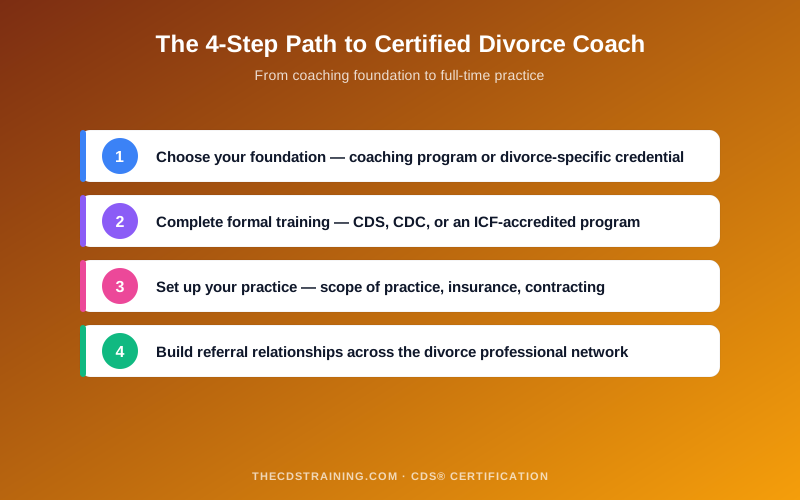
Short answer: To become a divorce coach in 2026, you need three things — a coaching foundation (life-coach training or an equivalent), specialized knowledge of the divorce process, and a defined scope of practice that keeps you clear of legal and therapeutic work you’re not licensed for. Certifications like the Certified Divorce Specialist (CDS)® and dedicated divorce-coaching programs provide the specialization piece. Below we walk through what a divorce coach actually does, the certification paths available, and how to build a practice that clients trust and other professionals refer to.
What a Divorce Coach Actually Does
Divorce coaching is a professional service that supports clients through the practical, emotional, and decision-making side of separation and divorce. A divorce coach is not a therapist, an attorney, or a financial planner — the coach’s job is to help clients think clearly, communicate effectively, and stay focused on the outcomes they want as their case moves through those other professionals.
Do You Need a Certification?
In most jurisdictions, “divorce coach” is not a regulated title. You don’t need a licence the way an attorney or therapist does. But there are two very good reasons to pursue formal training and certification anyway:
- Client trust and credibility. Certifications signal that you’ve been trained in the specific dynamics of divorce, not just general life coaching.
- Referral relationships. Attorneys, financial planners, and mediators are far more likely to refer clients to a certified specialist than to a generalist coach.
Prerequisites and Backgrounds That Fit
People come to divorce coaching from many backgrounds. The most common — and best-fitting — starting points are:
Life or Executive Coaches
Already trained in coaching methodology; divorce specialization is a natural add-on.
Therapists Transitioning
Licensed therapists who want to work in a shorter-term, action-focused modality.
Legal Professionals
Paralegals or ex-attorneys who understand the process but want a client-facing coaching role.
HR and People Ops
Career-transition and employee-support professionals expanding into personal-life coaching.
Lived Experience
People who’ve been through their own divorce and want to help others do it better.
Healthcare Backgrounds
Nurses, social workers, and other helping professionals with strong client-relationship skills.
Path A: Coaching Foundation + Divorce Specialization
This is the most common route. Start with a general coaching credential from an ICF-accredited program or similar body, then add divorce-specific training.
This path gives you the strongest coaching foundation and the broadest career flexibility. The divorce specialization then makes you referrable.
Path B: Divorce-Specific Certification (Faster Route)
If you already have a strong background in a helping profession — therapy, law, or advisory work — you may be able to move faster. Programs like the CDS for Coaches track are designed for professionals who want divorce-specific expertise without a full general-coaching curriculum first.
Comparing the Top Divorce-Coaching Credentials
The three most commonly discussed credentials in divorce coaching are the Certified Divorce Specialist (CDS)®, the Certified Divorce Coach (CDC), and CDFA (which is financial-focused but often paired with coaching work).
| Feature | CDS® | CDC | CDFA |
|---|---|---|---|
| Focus | Cross-disciplinary — legal, financial, mental health, real estate | Coaching-specific — process, mindset, communication | Financial only — asset division, cash flow, tax |
| Curriculum length | 16 hours | ~4 months typical | ~15 hours + case-study exam |
| Format options | In-person, hybrid, on-demand | Cohort-based online | Self-study online |
| Best for | Professionals who want to collaborate across disciplines | Coaches focused on client mindset and process | Financial planners specializing in divorce |
| Ongoing community | CDS graduate network + Canada Connect meetings | CDC alumni community | IDFA member network |
The right credential depends on how you want to position your practice. A coach who wants to work with attorneys and financial planners as referral sources often benefits from CDS because it teaches the same shared language those professionals use. A coach who works primarily on mindset and process (rather than technical divorce knowledge) may prefer CDC.
Setting Up Your Coaching Practice
Certification is just the first step. Building an actual practice takes decisions about scope, structure, and marketing.
Define your scope of practice
Put in writing what you will and won’t do — and share it with clients up front. A typical divorce coach’s scope excludes legal advice, therapy, and financial recommendations. Clarity here protects both you and your clients.
Set up your business structure
Register a business entity, get professional liability insurance (E&O), and set up simple contracting templates. Coaching-specific insurance carriers understand the model better than generic small-business policies.
Build referral partnerships
Your best clients will come from other divorce professionals. Attend local divorce-professional networking events (Bar association family-law sections, financial planner meetings), and be explicit about your scope so referrers know exactly when to send clients your way.
Choose a delivery model
Individual Coaching
One-on-one sessions, typically 45–60 minutes, weekly or bi-weekly.
Group Programs
Cohorts of 6–12 clients moving through similar stages of divorce together.
Course + Coaching Hybrid
Self-paced content plus scheduled coaching calls — scales your time.
Ethics and Scope of Practice

Build a simple referral list of local family-law attorneys, therapists, and financial planners you trust. The moment a client needs one of those services, refer immediately — and follow up with the client afterward.
Explore the CDS for Coaches Track
The most comprehensive cross-disciplinary training path for divorce coaches — with active graduate community and referral network.