Short answer: Family-law attorneys encounter the same seven divorce case archetypes over and over — high-asset splits, family-business divisions, mixed-jurisdiction cases, high-conflict custody disputes, gray divorces, cross-border moves, and cases with active mental-health or addiction dynamics. Each one benefits from a specific cross-disciplinary approach. Attorneys with CDS training know when to loop in a financial planner, therapist, or real-estate specialist — and their practice reputation grows as a result.
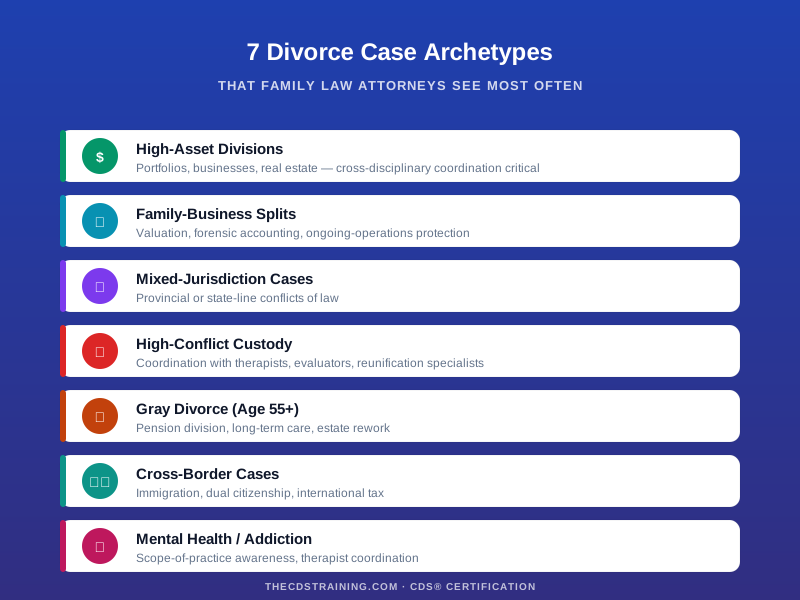
The Seven Divorce Case Archetypes
1. High-Asset Divisions
These cases involve significant liquid and illiquid assets — investment portfolios, retirement accounts, business equity, and real estate. Attorneys handling high-asset cases need to coordinate with a CDS-certified financial planner early. Cash-flow modeling, tax-consequence analysis, and asset valuation influence the settlement strategy from day one.
2. Family Businesses in the Marital Estate
When one or both spouses own a business, valuation becomes the central battleground. Certified valuation experts, forensic accountants, and CDS-trained financial planners each play a role. The attorney’s job is to structure the discovery and settlement path so the business’s ongoing operations aren’t destroyed by the process.
3. Mixed-Jurisdiction Cases
Clients living in one state or province but owning property in another — or with a spouse moving jurisdictions — face conflicts of law that shape every negotiation. In Canada, this often means navigating between provincial regimes (Ontario, Alberta, BC each have distinct family-property regimes). In the US, community-property vs equitable-distribution states create similar complexity.
4. High-Conflict Custody Disputes
These cases are as much about coordinating with mental-health professionals as they are about legal advocacy. CDS-trained attorneys build relationships with therapists working in high-conflict divorce, custody evaluators, and reunification therapists. See our related post: how therapists support clients through high-conflict divorce.
5. Gray Divorce (Age 55+)
6. Cross-Border and Immigration-Related Divorces
Clients with international ties — dual citizenship, foreign-national spouses, or children with cross-border custody — face layered legal considerations. Coordination with immigration counsel and international-tax specialists is often necessary from the first meeting.
7. Cases with Active Mental Health or Addiction Dynamics
These cases require the attorney to hold clear scope-of-practice boundaries while still being effective in negotiations. CDS training explicitly covers how to recognize when a case has crossed from “difficult” into “requires additional professional support,” and how to refer without alienating the client.
Why Cross-Disciplinary Training Helps Attorneys
The through-line across all seven case types is the same: better outcomes come from better collaboration. An attorney working solo is limited to legal remedies. An attorney embedded in a network of trusted financial, mental-health, and real-estate specialists can architect settlements that hold up long after the decree.
Case Assessment
Recognize case archetypes early and structure discovery around the real complexity.
Referral Network
Know who to loop in and when — financial planners, therapists, realtors, mediators.
Client Communication
Explain complex financial and emotional dimensions so clients make sound decisions.
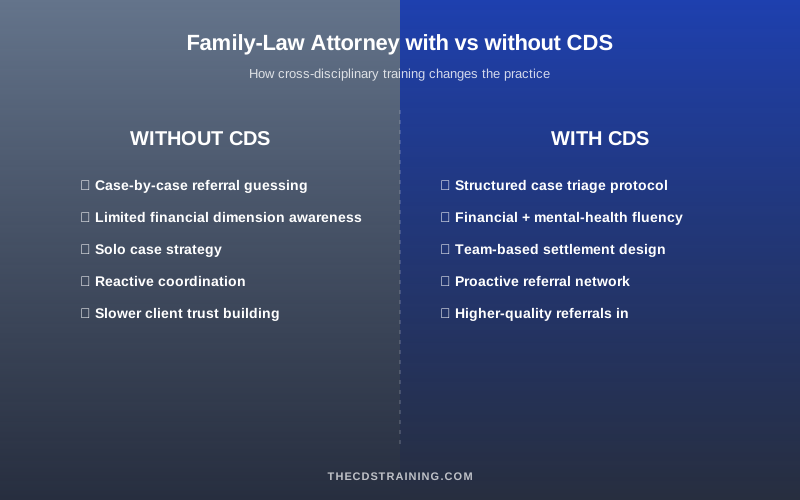
A Quick Case-Triage Framework
How Attorneys Build a Sustainable Divorce Practice
- Formalize your specialty positioning. “Family-law attorney” is generic. “CDS-certified family-law attorney specializing in high-asset divorce” is specific and referrable.
- Cultivate cross-disciplinary relationships. Meet monthly with CDS-certified financial planners, therapists, and realtors in your market. The strongest referrals flow between professionals who share vocabulary.
- Document your case-triage process. A written intake framework — what to ask, when to refer — makes onboarding new associates faster and improves outcomes.
- Track client outcomes. Post-decree data on client satisfaction, financial stability, and long-term compliance strengthens your marketing and helps you refine your approach.
Ready to Add CDS to Your Practice?
See the full curriculum and formats for family-law professionals.