Short answer: Financial planners build a divorce practice vertical through three levers — the right credentials (CDS® and often CDFA), a defined service model with clear scope, and a referral network of attorneys, mediators, therapists, and realtors. Divorce financial planning is a distinct specialty because clients need cash-flow modeling under acute uncertainty, tax analysis around asset division, and support decisions that shape their financial life for decades. Below is the practical playbook for CFPs entering this space.
Why Add Divorce as a Practice Vertical
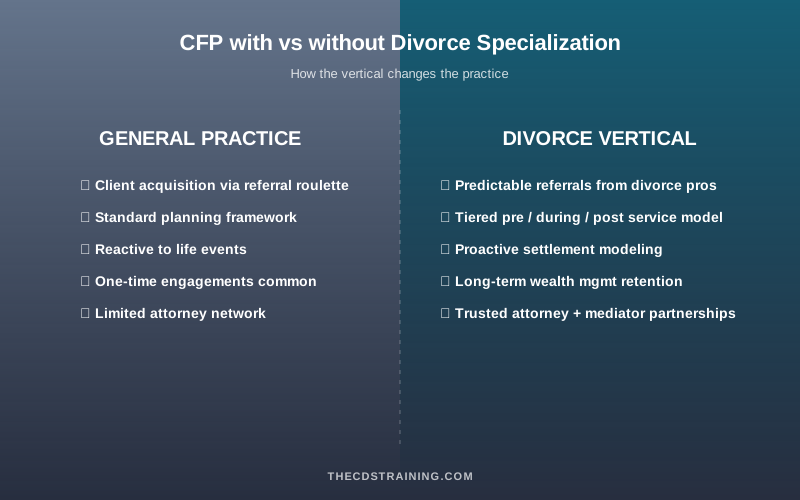
Divorce clients are typically 45–65, hold multiple asset types, and face life-altering financial decisions on a compressed timeline. They also have urgent needs — settlement modeling, retirement projections, insurance updates, estate documents — that create a natural pipeline of assets under management once the divorce settles. It’s one of the most consistently profitable verticals in wealth management.
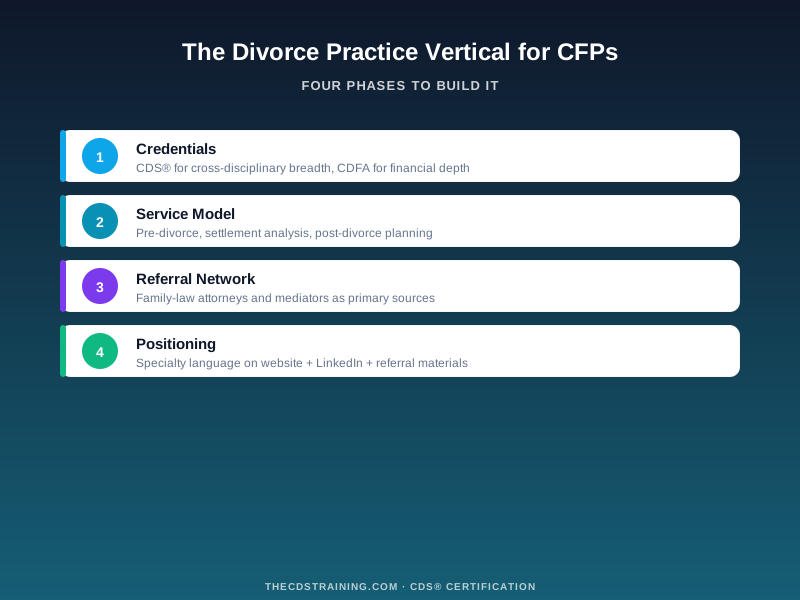
The Four Phases
Phase 1 — Credentials
Two credentials dominate the divorce financial planning space:
- CDS® — cross-disciplinary. Best for CFPs who want to work alongside attorneys, therapists, and realtors on the divorce team.
- CDFA — financial-depth. Best for financial-only specialization.
Many top divorce financial planners hold both. See our full comparison: CDS vs CDFA. The CDS for financial planners page has details on the CDS track.
Phase 2 — Service Model Design
Divorce financial planning breaks into three service tiers:
| Service tier | What it covers | Best for |
|---|---|---|
| Pre-divorce consultation | Options analysis, budget-under-separation modeling | Clients still deciding whether to file |
| Settlement analysis | Asset division modeling, tax-consequence analysis, buyout math | Clients in active negotiation |
| Post-divorce planning | Ongoing wealth management, retirement projections, estate rework | Clients with settled decree |
Phase 3 — Referral Network
Attorneys and mediators are the primary source of divorce financial planning referrals. Building relationships with them requires showing up in their world — Bar association family-law sections, mediator networking events, and CDS-alumni community meetings.
Phase 4 — Positioning
Language matters. “Certified Financial Planner” is generic; “CDS-certified financial planner specializing in divorce settlement analysis” is specific and referrable. Update your website, LinkedIn profile, and referral materials accordingly.
Scope of Practice for Divorce Financial Planners
Tools and Skills That Matter
Cash-Flow Modeling
Under separation, during divorce, and post-decree — with contingencies for spousal support outcomes.
Tax Analysis
Asset transfer treatment, filing status shifts, dependents, and long-term tax basis.
Retirement Splits
QDROs (US) or pension division orders (Canada) — mechanics, timing, and long-term impact.
Insurance Rework
Life, disability, and long-term care policy transitions during and after divorce.
Building the Pipeline
Related reading: CDS vs CDFA credential comparison and why MLOs are becoming divorce referral partners.
Add Divorce as a Practice Vertical
See how CDS training helps CFPs and wealth managers specialize in divorce financial planning.